
How We Covered Three Levels of a Sandy Backyard Wedding
Image Gallery
For a backyard wedding on several levels, map the ceremony, gathering area and reception as separate listening spaces. Give the quiet vows their own sound check, then plan who announces the move and what guests will hear when they arrive at the next tier.
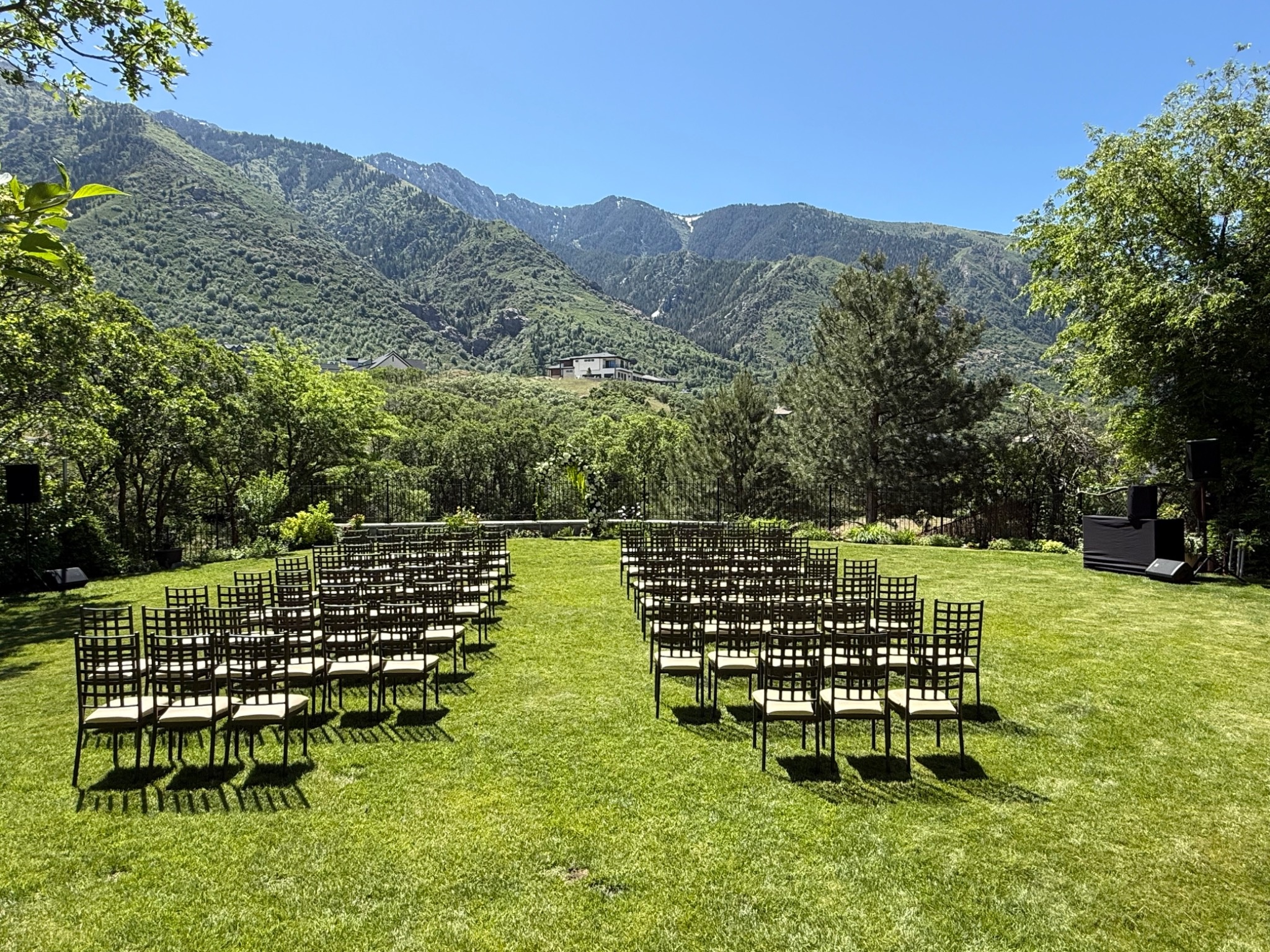
At a May 2025 Pepper Dale wedding in Sandy, Utah, the property gave the couple three distinct settings. Vows took place on the upper tier, guests gathered on the middle level, and the reception was below. The open canyon setting was part of the appeal, but it also meant the people listening weren’t all standing on the same level or facing the same direction. Our crew provided DJ and sound support and planned coverage around the tiers rather than asking one speaker to handle the whole property.
Give each level its own job
The ceremony needed to make a quiet voice understandable, including for guests sitting away from the center. The gathering area needed enough sound for the moments when guests were meant to listen without getting in the way of conversation. The reception area needed coverage for speeches and the music people were there to dance to. Think of those as separate jobs. If one system needs to serve more than one part of the property, talk about which areas are active at the same time and which can be turned down or muted when guests leave.
A useful early step is to take a few phone photos from the ceremony chairs, the edge of the gathering area and the dance floor. Mark the direction people will face and the path they’ll take between levels. A map that shows where the audience actually goes is more helpful than one set of measurements. It gives the DJ and planner a chance to spot a route that crosses a planned cable run or a seat that sits just around a corner from the nearest speaker.
Sound-check the vows before testing the dance music
For a ceremony on a hillside, ask someone to speak into the actual microphone at a natural level, then listen from an edge seat and the back row. A loud music track is a poor substitute for that test. During vows, guests care about the words that drop in volume at the end of a sentence. Sound that is comfortable near the aisle should still make those words easy to follow from the places where guests will actually sit.
On an exposed property like Pepper Dale, wind and elevation belong in the discussion before setup. Ask the audio team how they’ll prepare the microphones for wind and how they’ll approach coverage for people outside the main seating area. Also point out steps, narrow paths and landscaping before the team commits to speaker and cable locations. Guests shouldn’t have to step around the setup just to get from the ceremony to the reception.
Make the move to the next tier part of the timeline
With a change of level, a verbal cue can do a lot of work. Decide which person will tell guests where to go and whether the announcement should come from the ceremony microphone or the next gathering spot. If you expect guests to leave in waves, give the coordinator a way to signal when the next area is ready. The reception DJ should know whether to hold background music, start a planned entrance or wait until the last group has made it down the path.
Have the same conversation about the weather backup. It helps to know which part can move, which path remains usable, who approves the change and how the team will tell guests. Walk down to the backup space if it’s practical. Check that there’s a place for the ceremony, a place for the sound setup and a clear way for people to enter before you rely on it.
Send one useful site sketch, not a pile of photos
Make a rough drawing and label the ceremony, middle gathering area and reception. Circle where the guests will face during the ceremony, the first place they gather afterward and the far side of the dance area. Draw the route the wedding party will take and the route guests will actually use. If a friend or family member needs a less steep path, tell the planner early. On a tiered property, the shortest path for equipment and the clearest path for guests might not be the same.
On an early visit or video call, mark where there is likely to be safe power and who can confirm it. Note gates, steps and any loading limitations. If you’ll have several vendors on the property at once, show who is setting up on which tier. Agree with the DJ on where people can walk after dark and which areas need to stay clear of speaker stands and cabling. Those notes are easier to act on than a message that says the event is outside and the yard is “pretty big.”
Rehearse one guest move and one microphone handoff
For a three-level reception like the Sandy example, a trial run could start with a quiet person reading at the ceremony mic. When the last line is finished, check whether the coordinator can signal for the announcement and whether someone at the edge of the crowd hears the directions. Then follow the guest route yourself. Note where the first guests arrive and what they’ll hear in that spot while other people are still making their way down.
Do a second check for whichever reception speaker is easiest to overlook. Maybe the person giving a toast is sitting far from the DJ, or the host wants someone to welcome guests before everyone is seated. Decide where that person should stand, who will hand over the microphone and who signals that it’s time. You can test those steps without rehearsing the whole wedding, and the people making the handoff will know where to meet.
Questions couples can settle on the site walk
Does every tier need the same sound?
No. A tier used to mingle may need occasional instructions at an easy conversation level. A ceremony level needs clear speech, while the reception setup should reflect whether people will be dancing, listening to toasts or both. Start from how the guests will use each location; then let your audio team choose how to serve it.
Who calls the weather plan?
Name one decision maker and agree on the point by which you need an answer. The couple shouldn’t have to relay last-minute equipment instructions to each vendor. If the ceremony moves but the reception can stay where it was planned, make that distinction clear to the guest-facing team so the directions don’t make both locations sound uncertain.
What to share when you ask for a quote
Send a site sketch or a few photos, an approximate guest count, the event schedule, likely power locations and the best path for load-in. Flag steep routes or any specific access needs. If your Utah wedding is spread across different levels or rooms, walk Grid City Events through the layout. That lets us talk about what each part needs before a scenic spot turns into a hard place to hear.
Related: planning a Utah wedding.